
The Frescoes of the Church of the Peribleptos, Ohrid (1295) — Part II
The 1295 frescoes of the Peribleptos (St Clement) in Ohrid by Michael Astrapas and Eutychios: the Lamentation, Dormition and Life of the Virgin.
True fresco is painting on wet lime plaster. As the plaster dries, the pigments bind into the wall itself. The technique demands speed and confidence, and in the hands of Byzantine and Balkan painters it produced some of the most powerful religious art in Europe. This section gathers articles on fresco ensembles across the Orthodox world, with a particular focus on Macedonia, Greece, Bulgaria and the wider Balkans. It visits Ohrid and Kastoria, the monasteries of Thessaloniki and the painted churches of the Troodos mountains, and it traces how artists moved between royal and aristocratic patrons. Wherever painters' names survive, often hidden in signatures on garments or weapons, we follow their careers from church to church. Articles describe the layout of each programme, its key scenes, the style of its painters and the state of the paintings today, including the conservation work that has rescued many from smoke, damp and later overpainting.
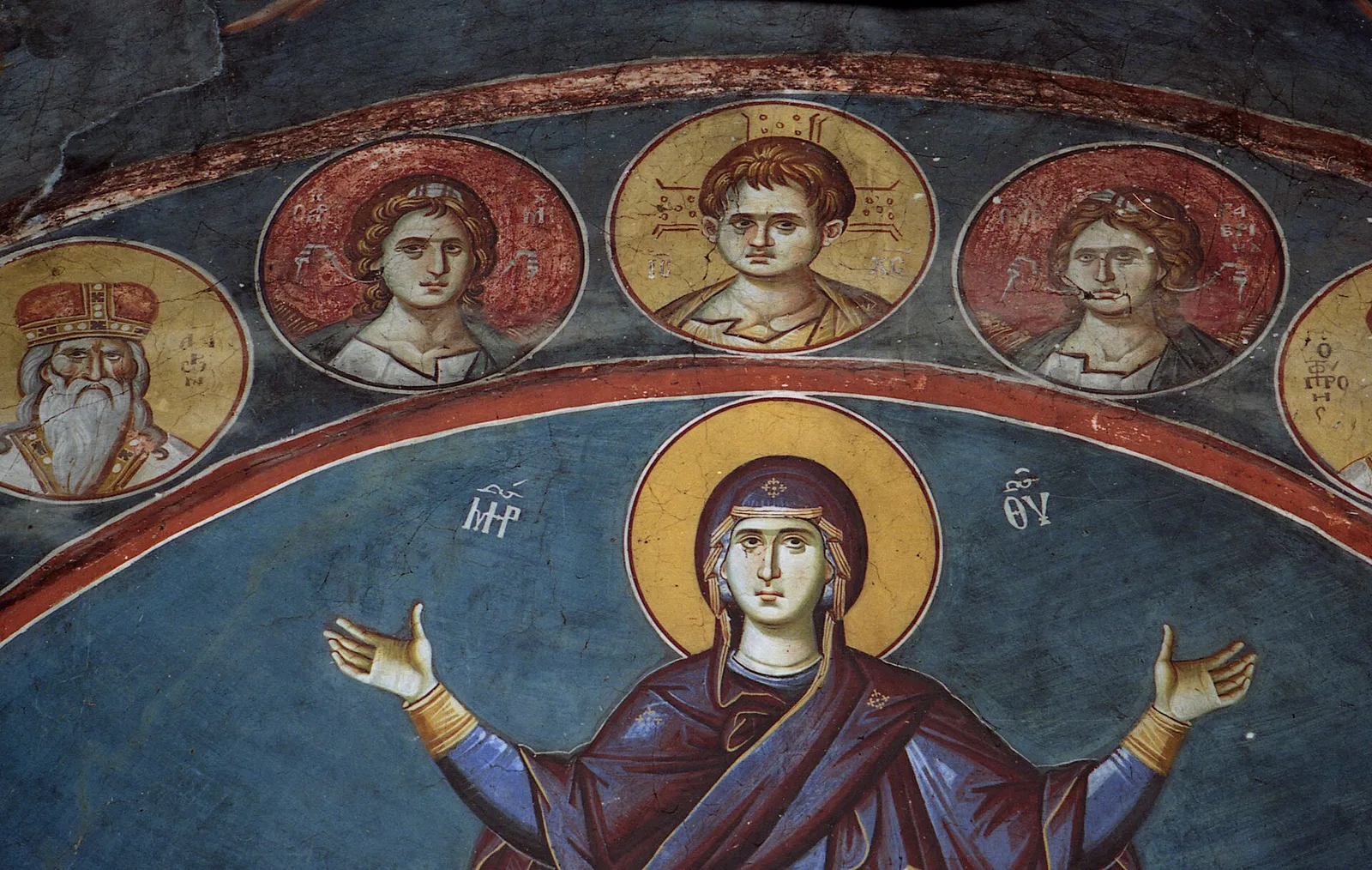
The 1295 frescoes of the Peribleptos (St Clement) in Ohrid by Michael Astrapas and Eutychios: the Lamentation, Dormition and Life of the Virgin.