
Russian Icons of Novgorod, 12th Century — Part I
The earliest surviving icons of Novgorod: the Holy Face, St George of the Yuriev Monastery, the Ustyug Annunciation and their Byzantine roots.
Russia received the icon from Byzantium along with Christianity at the end of the tenth century. Over the next seven hundred years it developed one of the richest painting traditions in the Orthodox world. This section follows that story city by city and century by century. It begins in Novgorod and Kiev, where Greek masters and their Rus' pupils painted the first panels for new stone cathedrals. It continues through the schools of Pskov, Tver, Rostov and Vladimir-Suzdal, each with its own palette and favourite saints, to Moscow. There, in the fourteenth and fifteenth centuries, Theophanes the Greek, Andrei Rublev and Dionisy shaped what is now recognised as the classical Russian icon. Each article looks at specific works: when and where they were painted, what they show, how they were made and where they can be seen today. We note where dates and attributions are uncertain, since many of the oldest icons were moved, repainted or renewed over the centuries. Read in sequence, the articles show how a borrowed art became a national one while staying faithful to the canon it inherited.
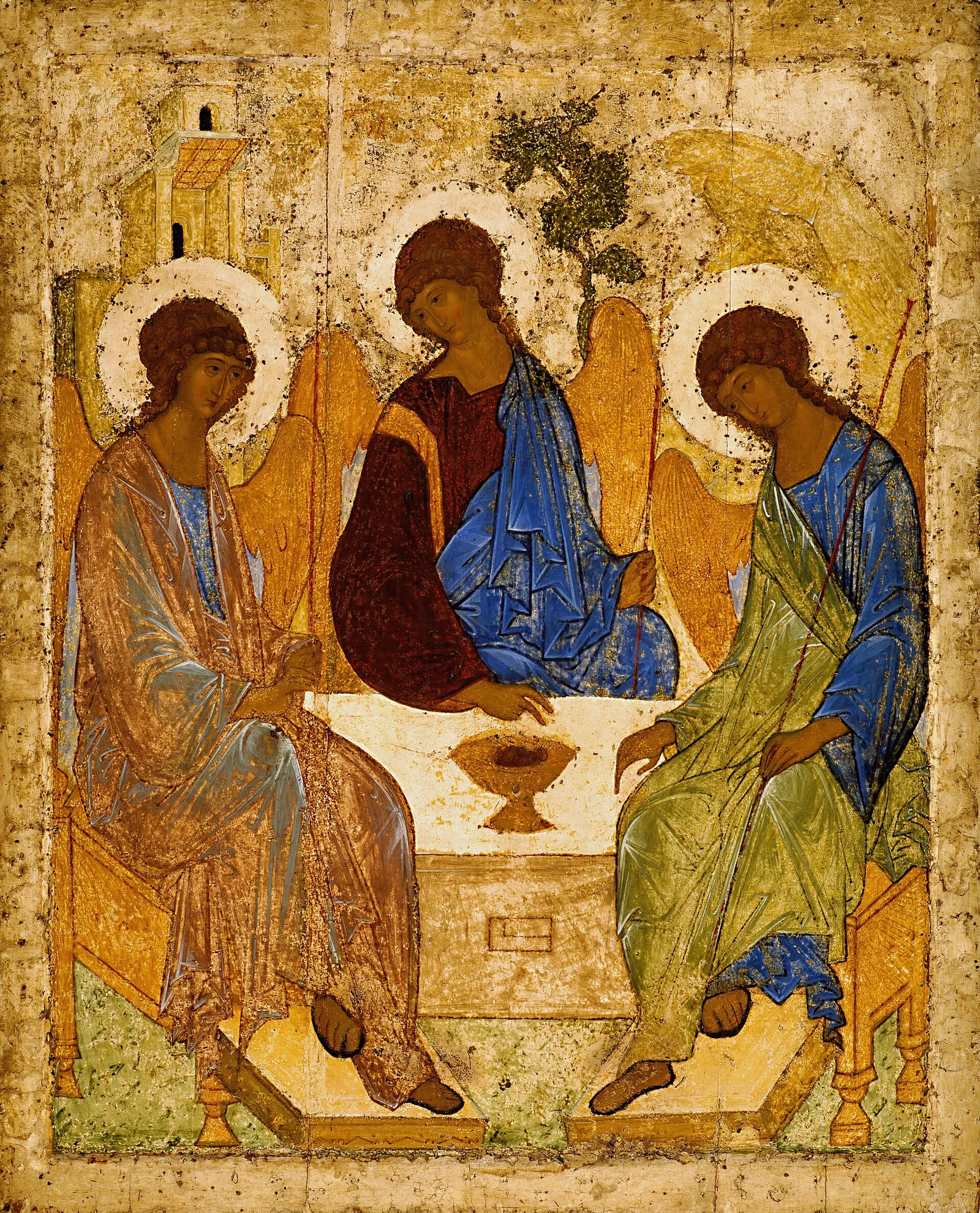
The earliest surviving icons of Novgorod: the Holy Face, St George of the Yuriev Monastery, the Ustyug Annunciation and their Byzantine roots.