
The Nativity of Christ in Old Russian Icons
How Old Russian icons show the Nativity: the cave, the reclining Virgin, Joseph and the tempter, the washing of the Child — in Novgorod, Moscow and Rublev's circle.
Many of the greatest Russian icons were known for centuries only beneath layers of darkened varnish, soot and later repainting. Their colours and lines were rediscovered at the start of the twentieth century, when pioneering restorers began to clean them. Exhibitions in Moscow in 1913 revealed medieval Russian painting to the public as a major art. This section is devoted to those 'old' icons, from roughly the twelfth to the seventeenth century, and to the story of their recovery. It discusses the Moscow school of the fifteenth century, the Stroganov school and the court workshops of the seventeenth century, and the northern provincial icons painted for wooden churches far from the capital. Alongside the icons themselves, articles look at the work of restorers and collectors and at the museum collections that now preserve these works. This history affects how we see the paintings, since every surviving icon carries traces of its own long history of use and repair.
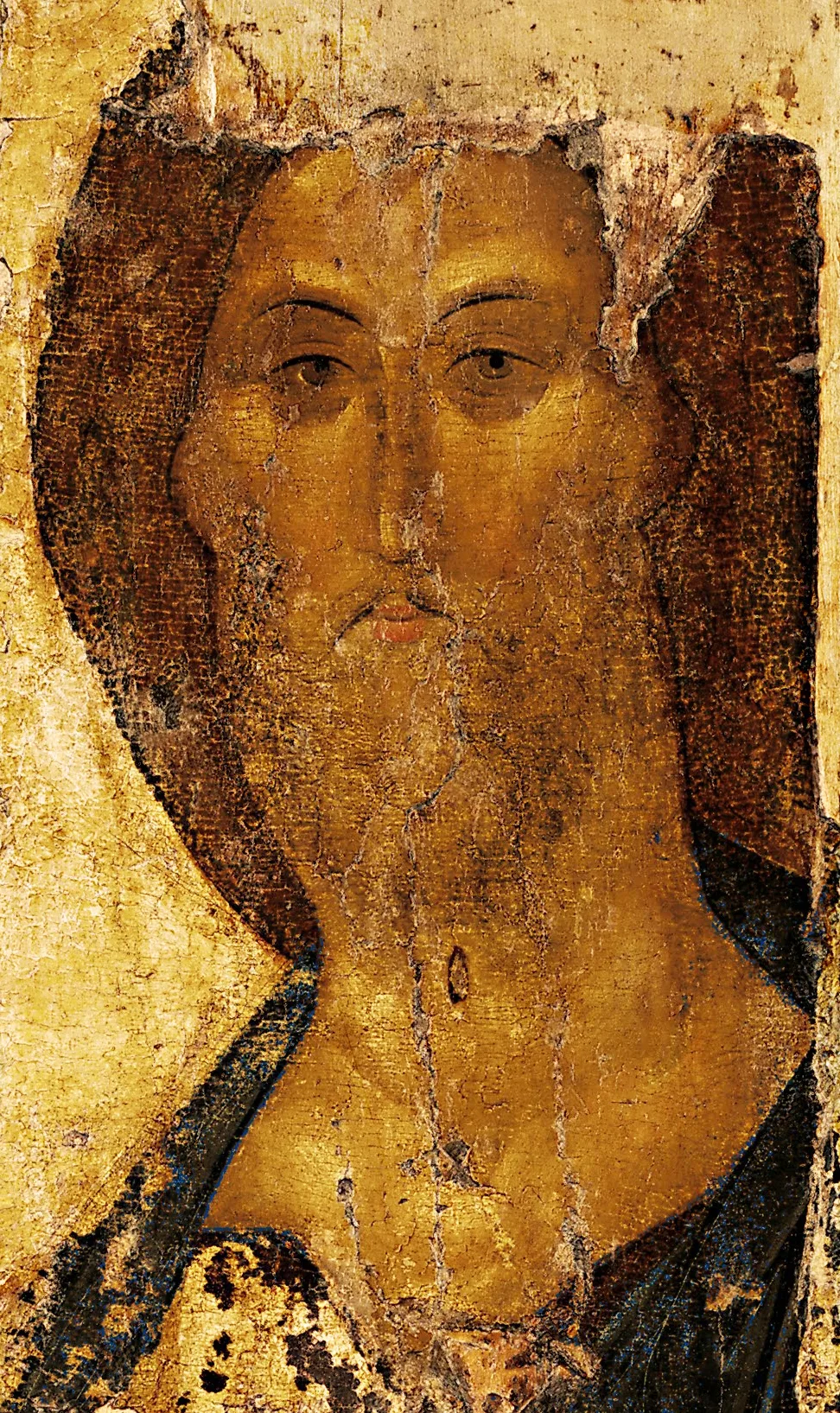
How Old Russian icons show the Nativity: the cave, the reclining Virgin, Joseph and the tempter, the washing of the Child — in Novgorod, Moscow and Rublev's circle.